
How Ballot Boxes Have Evolved: From Wooden Origins to Smart Drop Systems
Posted by My Charity Boxes Team on 18th Oct 2025
Introduction
As election technologies advance, the humble ballot box remains one of the most enduring symbols of democracy. While voting machines, digital registries, and remote platforms continue to evolve, it is the ballot box — that simple, secure receptacle — that continues to represent integrity, privacy, and the voice of the people.
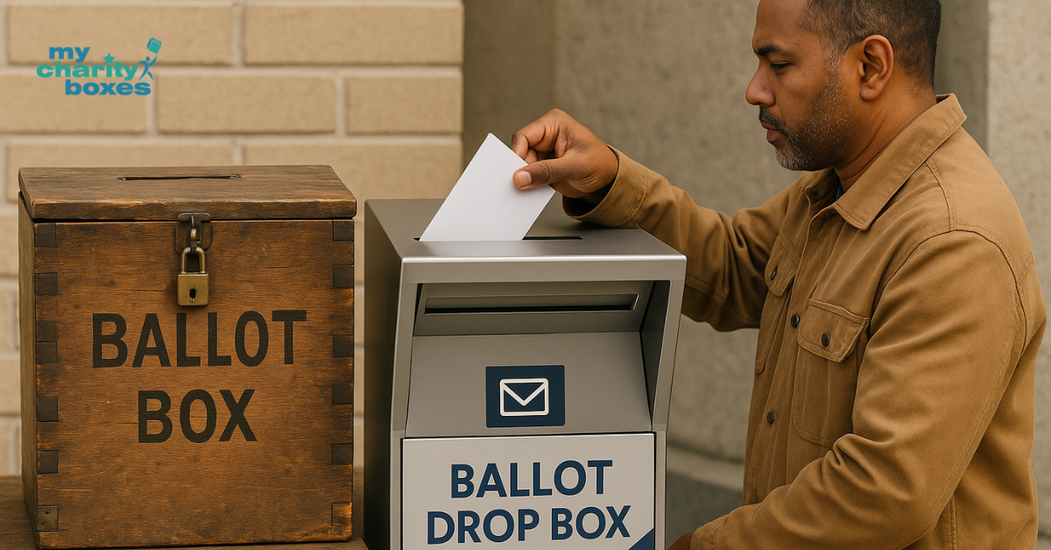
The history of ballot boxes stretches back more than three centuries. From crude wooden chests to today’s smart drop boxes equipped with sensors and electronic locks, every stage of evolution reflects a universal goal: to protect every vote while fostering public trust.
In this article, we’ll trace how ballot boxes have transformed — in material, design, and function — and how modern innovations ensure safer, smarter, and more transparent elections. Along the way, you’ll see how My Charity Boxes integrates these historical lessons into durable, technology-ready designs built for today’s world.
Early History: Wooden & Glass Boxes
The first known ballot boxes emerged in 17th-century England and early America. They were simple wooden containers — handcrafted, sturdy, and utilitarian. In town halls and guild meetings, citizens would drop handwritten votes or colored marbles into these boxes to express their will.
Early wooden ballot boxes had a slot on top and a removable lid with a single lock. While functional, they lacked tamper resistance. Election officials often relied on trust rather than engineering to ensure fairness. In some communities, multiple locks were added — each key held by a different official — to prevent unauthorized opening.
By the late 18th and 19th centuries, transparency became a central value in democratic voting. Innovators began experimenting with glass and transparent boxes, allowing observers to confirm the box was empty before voting began. These early clear boxes became a visual metaphor for honesty in elections, symbolizing open governance.
This shift was revolutionary. The design of the box itself began to reflect democratic principles, not just utility.
The Rise of Metal Ballot Boxes
As suffrage expanded and elections became more complex, durability and security grew increasingly important. The 20th century saw a global transition from wood to metal, ushering in the age of steel and aluminum ballot boxes.
Why metal mattered:
-
Tamper resistance: Steel walls were harder to pry or cut open.
-
Durability: Metal boxes survived transport, stacking, and decades of reuse.
-
Lock compatibility: They could support stronger mechanical locks and internal shielding.
-
Fire safety: Metal provided protection against accidental fires and vandalism.
These advantages made metal the standard material for secure voting drop boxes worldwide. They also introduced the idea of standardized manufacturing — consistent dimensions, labeling, and sealing systems that helped streamline logistics.
Modern election drop boxes still reflect this era’s engineering principles. For a practical breakdown of material strengths, see our comprehensive guide on how to choose a ballot box based on material, security, and capacity.
Transparency for Trust
Transparency has always been linked to voter confidence. As aceproject.org notes, visible ballot boxes are central to ensuring elections are perceived as free and fair.
When transparent boxes were first introduced, their main purpose was verification — allowing poll workers to confirm that boxes were empty at the start of an election and sealed properly afterward.
Today, the transparent ballot box serves a dual role:
-
Visibility: Voters and observers can confirm legitimate use.
-
Symbolism: Transparency demonstrates openness and fairness in governance.
However, modern designs often strike a balance between transparency and privacy. Boxes made from acrylic or polycarbonate are sometimes frosted or partially tinted, ensuring that individual ballots remain unreadable while the system’s integrity remains visible.
From glass to acrylic, transparency evolved from a simple design feature to a symbol of democratic trust — one that continues to define election architecture worldwide.
Modern Materials & Manufacturing
By the late 20th century, technological and material innovations reshaped how ballot boxes were made. The introduction of HDPE (High-Density Polyethylene) and advanced composites provided new levels of flexibility, strength, and weather resistance.
HDPE (High-Density Polyethylene)
HDPE quickly became a preferred material for modern ballot boxes because it is lightweight, non-corrosive, and resistant to impact. It’s also recyclable, making it environmentally sustainable for large-scale use. Outdoor models made from HDPE withstand temperature extremes and heavy use during early voting periods.
Reinforced Plastics and Composites
Composite materials blend strength and lightness, offering an ideal balance between security and portability. They’re widely used in temporary or mobile voting setups where boxes must be moved frequently.
Powder-Coated Steel
For permanent installations, powder-coated steel remains unmatched. Its surface resists rust and scratches, and it pairs perfectly with tamper-evident locks. These boxes are the workhorses of municipal and institutional elections, used year after year.
Each material has its role. The future of election hardware lies in hybrid systems that combine the strength of steel with the innovation of polymers and digital technology.
For placement strategies that optimize accessibility and turnout, refer to our guide on ballot box placement and deployment for maximum participation.
Hybrid & Smart Drop Boxes
As technology advanced, so did the concept of security. The last decade has introduced smart drop boxes — a fusion of physical strength and digital intelligence.
Defining Smart Drop Boxes:
These systems combine traditional ballot protection with electronic features for monitoring, logging, and alerting election authorities in real time.
Common smart features include:
-
Tamper detection sensors: Trigger alarms if the box is moved or forced open.
-
Electronic locks: Require access codes or keycards for authorized entry.
-
Audit trail systems: Record every opening and closing with timestamps.
-
GPS tracking: Monitors mobile or temporary boxes in transit.
-
Capacity sensors: Alert officials when boxes near full capacity.
-
Remote monitoring: Sends real-time notifications to election control centers.
Some electronic ballot boxes are even equipped with solar panels to power sensors or cameras in outdoor environments.
These innovations don’t replace physical ballots — they reinforce their security. In an age of misinformation, they demonstrate that election infrastructure can be both transparent and tamper-resistant.
For additional insight into tamper prevention, read our detailed post on how to prevent tampering, theft, and fire in ballot boxes.
Ballot Boxes vs. Digital Voting
With the rise of online and blockchain-based voting proposals, one might wonder whether physical ballot boxes are becoming obsolete. The reality: they’re more essential than ever.
Why Physical Boxes Still Matter
-
Accessibility: Not every voter has consistent internet access or digital literacy.
-
Auditability: Paper ballots create a verifiable trail that can be recounted and cross-checked.
-
Security: Physical systems can’t be hacked or digitally manipulated.
-
Public trust: Voters value tangible systems they can see and understand.
While digital voting may someday complement physical elections, secure ballot boxes will remain vital for ensuring inclusivity, equity, and verifiable results.
Future Trends & Innovations
The future of the modern ballot box lies in merging physical reliability with digital transparency. Engineers and election officials are already exploring several next-generation concepts:
Embedded Verification Systems
Smart boxes with voter authentication modules could verify voter credentials through QR codes or biometric scans before accepting a ballot, preventing unauthorized submissions.
Blockchain Integration
Blockchain technology promises unalterable digital records. Pairing physical ballot deposits with blockchain tracking could create transparent, tamper-proof audit trails for every vote.
Environmental Sustainability
Next-generation boxes will likely use recyclable or biodegradable materials while maintaining the durability of metals and HDPE.
Real-Time Election Monitoring
Through IoT connectivity, smart boxes may send live status updates, tamper alerts, or environmental data to central dashboards — enabling faster response times and higher transparency.
As technology evolves, these innovations will make elections not just more secure but more efficient and environmentally responsible.
How My Charity Boxes Reflect This Evolution

At My Charity Boxes, we combine historical craftsmanship with modern engineering to produce ballot boxes that reflect the full journey of innovation.
-
Durable materials: From metal and HDPE to hybrid-ready designs, our boxes suit every election environment.
-
Tamper-evident designs: Built with one-way slots, concealed hinges, and serial seals.
-
Fire and weather resistance: Powder-coated steel models ensure year-round protection.
-
Smart compatibility: Many designs are pre-adapted for sensors, cameras, or digital locks.
-
Custom branding and signage: Enhances credibility for municipalities and organizations.
Whether you’re running a local referendum, a school board election, or a global NGO vote, we provide secure, scalable solutions that uphold public confidence.
Explore the ballot boxes collection to find the right model for your setup, or visit the Shop for customizable options, accessories, and bulk orders.
For smaller organizations looking to upgrade from traditional to modern setups, our guide on ballot box deployment for small elections and organizations offers practical advice for secure implementation.
Conclusion
From simple wooden chests to sophisticated smart drop boxes, the evolution of ballot boxes mirrors humanity’s ongoing pursuit of transparency, fairness, and innovation.
Wood introduced the concept. Metal brought durability. HDPE made it sustainable. And now, digital integration makes it smarter, safer, and more connected than ever before.
Through every era, one principle has never changed — the ballot box is more than a container; it’s a covenant of trust between citizens and their governments.
Explore our modern ballot boxes today at My Charity Boxes — where timeless craftsmanship meets cutting-edge security to protect democracy, one vote at a time.
FAQ
When were ballot boxes first used?
Ballot boxes date back to the 1600s, when simple wooden containers were used for early elections and community votes.
Why were transparent ballot boxes introduced?
They were created to increase public confidence by allowing observers to verify that boxes were empty before voting began.
What materials are used in modern ballot boxes?
Common materials include HDPE, powder-coated steel, reinforced plastic, and acrylic — each chosen for strength and security.
What are smart ballot boxes, and how do they work?
Smart boxes include sensors, electronic locks, and audit tracking systems that detect tampering and log access events in real time.
Will blockchain change how we vote in the future?
Yes. Blockchain systems promise immutable digital records that could work alongside physical ballots to enhance transparency.